
LOCATION:
Giika, Meru County, Kenya
Approximately 250 miles (402 km) northeast of Nairobi, and 8 miles (12.8 km) southeast of Maua.
COMMUNITY DETAILS:
The community is based on a hilly slope on the eastern side of the Nyambene hills and
sits at an altitude of 3000 ft. On average the community consists of 45 children, 15 faculty members and staff, and a variety of livestock. The current above-ground infrastructure, including housing, fencing, and farmland, is in good standing and houses all of the constituents of the community.
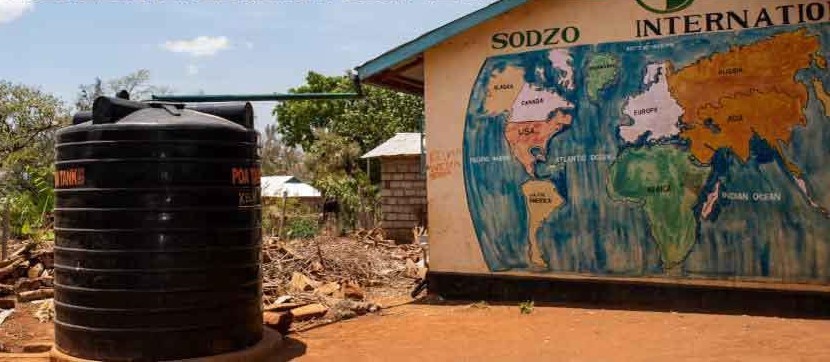
The water infrastructure is in a temporarily-working state. Since no water is being supplied via a previously-drilled borehole, the community has established an alternative water supply to an uphill cistern by tapping in to a local stream and routing this water back into the cistern. Several leaks likely still exist throughout the system and most metallic water fixtures have corroded beyond feasible use. The sanitation facilities, such as showers, continue to face clogs and are backed up. The latrine and staff quarter toilets appear to be functioning
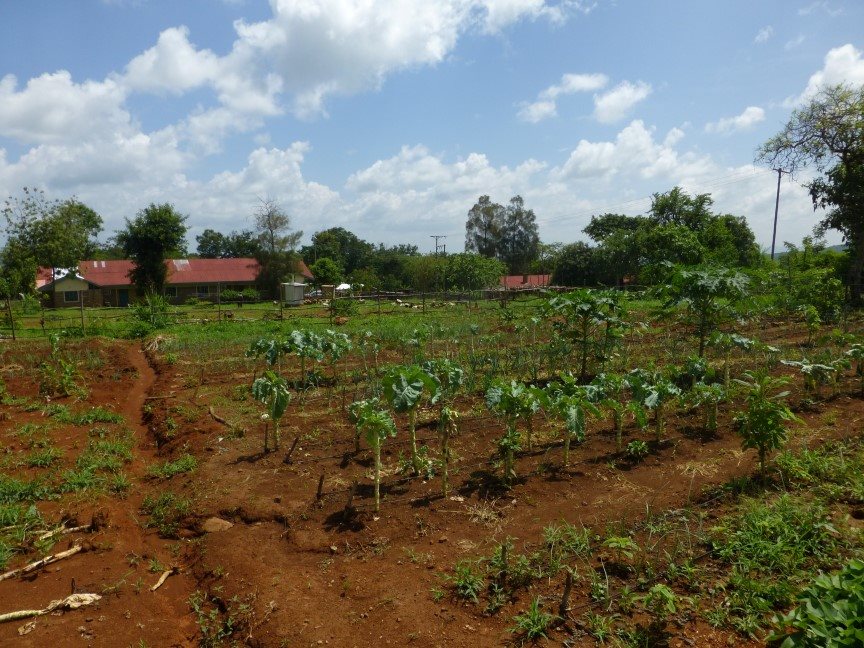
Planted crops on the Watoto Wa Ahadi Rescue Center in Giika.
PROJECT SUMMARY:
Sodzo International purchased abandoned farmland in the central Kenyan county of Meru and converted it into an orphan rescue center known as Watoto Wa Ahadi (Swahili translation: Children of Promise) Rescue Center.
The South Houston/JSC Professional Chapter originally partnered with Sodzo International to develop the infrastructure to support the school and surrounding community, beginning with identifying and providing a sustainable source of clean water. Once having established a water source, this team will work with Sodzo International, the teachers at the center, and the community to provide other infrastructure as needed and desired.
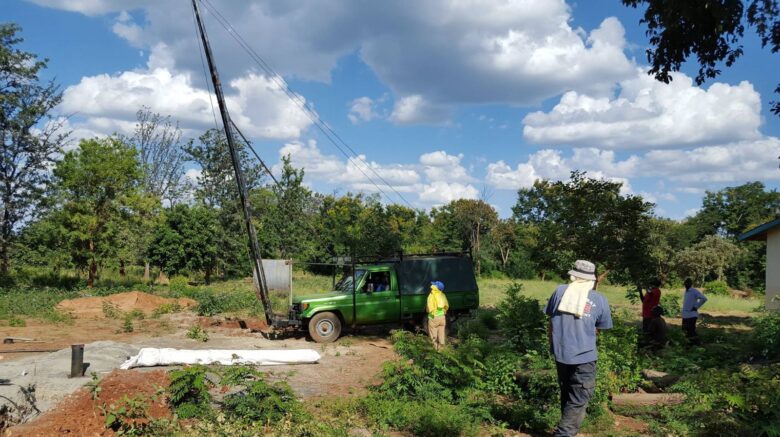
The school currently uses small-scale rainwater harvesting, collecting water from an open stream, or purchasing water that has been transported to the area. A borehole drilled in 2015 was no longer functioning in 2017. Upon further research, the team learned that 60% of the boreholes in northern Kenya fail. Over the years the team has conducted research to better identify what makes boreholes in the area successful and what other options are there for us to provide water for the school, its crops, and its livestock.
The chapter’s scope of work in addressing the community’s need of clean water encompasses everything in regards to establishing a water sourcing and distribution system. In other words, the chapter leads the effort for the establishment of and funding for the water well, pump, distribution pipe, and all necessary additional hardware. The chapter also facilitates the installation of all aspects of the system by ensuring proper installation of the former two, and personally implementing the latter two. The scope of the project also aims to address the issues identified by the community since the first implementation trip
and their needs for the future regarding water supply.
Prior Travel and Annual Project Updates
2016 (March) – Assessment Trip Summary
Day #1
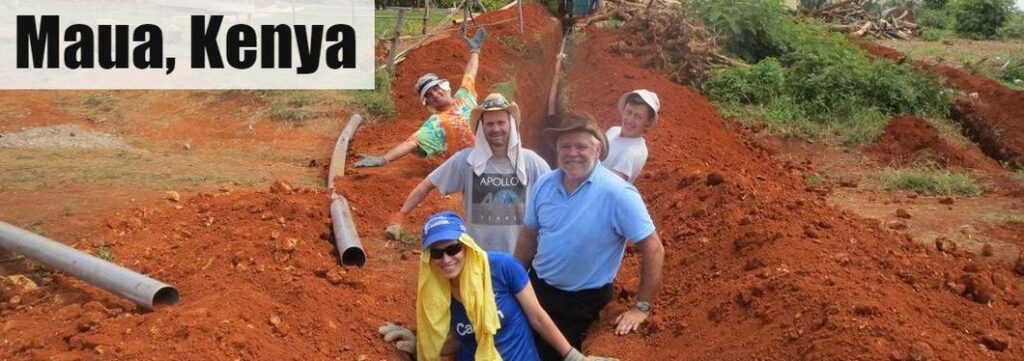
The team spent the day verifying and measuring trench runs, including doing a preliminary pipe laying, to confirm we had the pipe we needed. We inspected the plumbing at the staff quarters and inventoried what had been delivered vs. what we needed. Additional trench runs were planned and started by the local labor. We were very fortunate to be able to get both the electrician and the plumbing supply business owner out to help us confirm our equipment needs.
Day #2
The team began the day purchasing additional supplies from a local plumbing business (the owner had been to the site with us). Pipe, joins, Ts, PVC cement, brass and steel fittings, etc. Once at the site we inspected the staff quarters plumbing and attempted some clean-outs and scoped out the existing infrastructure to determine what to replace and what to salvage. We directed the straightening of trenches and the filling of some that it turns out we won’t need. We laid and cemented some pipe from the showers to the dorm for fresh and gray water. The gray water line will eventually feed all the way down the hill to a biogas digester planned for installation later this year or in 2017. We laid and cemented some of the early biogas lines alongside the dorm as well. (We also got a wi-fi modem so we can post updates to you fine folks!)
Day #3
Another stop at the plumbing supply business, followed by a busy day of cementing pipe runs. Water from the well to the cistern. Water back down from the cistern to the campus. Biogas and sewer lines, too. We disassembled and planned a refurbishment of the water feeds to the staff quarters. We surveyed a proposed narrow road bed down to the planned location for the animal pens and the biogas digester (future implementation). We met with the representative of the company that will supply the well pump to determine power and instrumentation needs. We’re halfway through and we’ve got so much to do to get this place ready for the kids in April!
Day #4
We got an early start today, leaving the bungalow for Giika at 7:15 AM. A bouncy hour late we were there. Roman extended the waste water line for the staff quarters the length of the building and mapped out the down- and up-riser connections. The plumbing supply company arrived later this morning with more supplies that didn’t come in earlier. We directed the local labor in leveling and sloping trenches from the kitchen down in the direction of the biogas. Alaina and Mana laid the freshwater line as far as the bend toward the (future) biogas digester. Jack built and installed custom risers all day. Jake got to play civil engineer for about 90 minutes when he worked with the site foreman to design a rudimentary wooden bridge over a critical pipe run, to ensure that vehicle traffic doesn’t crush the pipes between the pump and the cistern.
Day #5
Once again the day began with a stop at the local plumbing supply before heading to the campus. We scarred holes for the kitchen sink. Jack assembled the 4-riser manifold for the showers. Mana did the first Garman GPS walkaround of the campus. We were later able to upload the Garman treks to Google Earth and overlay our current campus. Mana and Alaina laid the pipe under the bridge and other locations around campus and later rolled electrical cable through the trenches.
The team taught the locals how to thread pipe to spread the work load. Their work was as good as the plumbing supply company. Roman continued the risers construction for the staff quarters. We also took a break to celebrate Jake’s 55th birthday. Isaac, one of our local team members, sang a Swahili birthday song.
Finally, the team received our Kimeru names from the locals, a wonderful gift.
Roman Stromeyer :“Mutabari”, which means “One who helps the people”
Jack Bacon: “Marete”, which means, “The bringer of needed things”, or, “One who provides”
Alaina Brinley: “Nkatha”, which means, “Respected and welcoming woman”
Mana Vautier: “Mwenda”, which means love.
James R. Mireles (Jake): “Mutuarusiu”, which means, “Courageous one” or, “Guardian”
Day #6 (last day on site!)
After another final stop at the plumbing supply, we headed down. Jack finished scarring for the kitchen and Alaina, Mana and Jack installed in the risers for the kitchen hot and cold water and biogas. Alaina and Mana finished pipe joining. Roman finished out the sewer lines and fresh water lines for the staff quarters. Jake scoped out the staff quarters attic from a ladder to evaluate whether hot water lines could run the length of the building. We decided we will likely run the hot water lines along the outside of the building. We were able to see the pump installed this afternoon. That was a great treat. Finally, in a frantic rush to the sunset deadline, we all finished and installed risers for the showers, dorm toilet, greenhouse and kitchen.
2019 Annual Update
In 2019 the Kenya team leadership transitioned to Michelle Patrick-Krueger, Roman Stromeyer, and Mark Whiddon. An assessment trip was planned for March 2019, but with the global shutdown due to the pandemic, travel was cancelled. During 2019 the team continued to communicate with community members and learn more about the water situation in the Meru area.
2020 Annual Update
With the continued global quarantine measurers in places for travelers, we were unable to reschedule our planned trip from 2019. However, we did learn more about the borehole situation in the Meru area of Kenya – roughly 60% of boreholes drilled in the region fail. This gave us more focus: finding what it takes to build a successful borehole in the Meru area. Thanks to the many hours our in-country volunteer (Charles) spent obtaining detailed information on the successful wells in a 10km radius.
2021 Annual Update
The team looks forward to continuing our work with Charles to investigate the wells in the Meru area to learn what successful wells have in common and to finally reschedule and complete that assessment trip from 2019. The team commissioned a hydrogeologist report to identify the best location to drill a successful borehole (i.e., hit water and not be a dry hole).
2026 Annual Update
The EWB-USA team has solicited a request for quotation from potential contractors to drill a borehole and install water pumps and distribution lines in the community, with solar panels for control power, on a turnkey basis.
PROJECT ADOPTION DATE:
June 2015 (South Houston/JSC Professional Chapter)
PROJECT STATUS:
Active – Implementation – Pending evaluation of received quotes and receipt of additional quotes and designs from interested contractors. Team travel tentatively mid-to-late 2026.
The team is actively looking for support on all fronts. We need volunteers (engineers and non-engineers, alike), interested donors, and supporters to help us spread the word.
Please contact us using the button below to find out how you can help us provide the Giika community with a sustainable source of clean water!
You can follow our chapter’s Instagram for project updates!
TEAM LEAD:
- Joseph “Jody” Muniz, PE – Project Co-Lead
- David Rivers – Project Co-Lead
Past Leads
- Jack Bacon – Project Lead
- Alaina Brinley – Project Lead
- Mana Vautier – Project Lead
- Michelle Patrick-Kreuger – Project Lead