
LOCATION:
Hospital Mugonero and L’Espérance Children’s Village (Orphanage), Karongi, Rwanda
Approximately 33.5 miles (54 km) south of Rubavu, and 55 miles (89 km) southwest of Kigali.
COMMUNITY DETAILS:
In a small chapel, on the grounds of a missionary hospital overlooking the Congo and sparkling Lake Kivu, 3,000 people were massacred in 1994. The Mugonero community still struggles with rebuilding after these brutal acts. Hospital Mugonero sits atop a hill on the western border of Rwanda, accessible only by a red dirt road riddled with bumps and hairpin switchbacks.
Hospital Mugonero relies on facilities and utilities that have deteriorated through the decades and destruction. In 1994, 3,000 people hid in the Hospital Chapel to escape the genocide which eliminated a third of the population in the province of Kibuye. The priest in the church wrote an appeal to a neighboring church leader that in part said, “We wish to inform you that tomorrow we will be killed with our families.” Instead, the other priest sent the military to the complex, and they killed almost every person in the building, damaging many facilities in the process.
With the magnitude of the destruction that occurred in Mugonero and the rest of Rwanda, the challenge of rebuilding the community was immense. The hospital services a large region in the province of Kibuye. Five clinics feed into the hospital, as well as several local schools. Community leaders worked everyday towards improving the quality of life for everyone. Where you might expect a feeling of helplessness, there was instead a common determination to rebuild.
The L’Espérance Children’s Village (Orphanage) partners with the hospital for the health care needs of the orphans. Founded in 1994 for genocide orphans, the facility houses younger AIDS orphans as well as adults who grew up there and have nowhere else to go.
As of 2012 the orphanage was home to 127 orphans, with several staff members living either at the orphanage, or immediately outside the gate, bringing the total population of the community to approximately 150. The community leader is the orphanage director. While the orphanage comes under partial managerial and financial direction by L’Espérance, a German based NGO operated affiliated with the Seventh Day Adventist Church, a number of NGOs and several EWB chapters have been involved in projects at the orphanage over the years. L’Espérance funds roughly 20% of the orphanage’s day-to-day operations. The remainder is made up of funding from the Government of Rwanda, a variety of grants and private donations. New projects are funded in part through excess funding, grants and donations.
PROJECT SUMMARY:
Pre-2005 – 2005 (University of Colorado – Boulder Program Support)
In May 2005 a team from EWB-USA, including engineers from the South Houston/Johnson Space Center Professional Chapter, first visited Hospital Mugonero while conducting installation of a Bring-Your-Own-Water (BYOW) water purification and filtration system in another border community (Muramba) with the University of Colorado at Boulder Chapter. The team was hosted by the Hospital Mugonero director, Dr. Mark Ranzinger, an American surgeon. Dr. Ranzinger introduced the team to other hospital personnel and presented the needs of the facility.
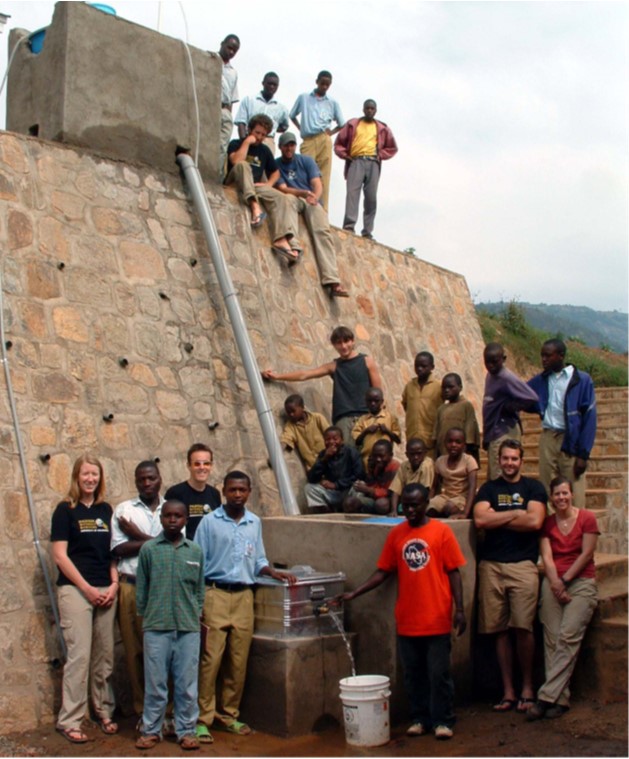
Members of the EWB-USA University of Colorado at Boulder team complete the implementation
of the Bring-Your-Own-Water (BYOW) purification and filtration system in nearby Muramba in 2005.
Through the early years of the University of Colorado at Boulder program, the the South Houston/Johnson Space Center supported on several other projects: installation of solar-powered lighting systems at Hospital Mugonero (January 2006), installation of a UV water sanitation system at Hospital Mugonero, and installation of biogas generator.
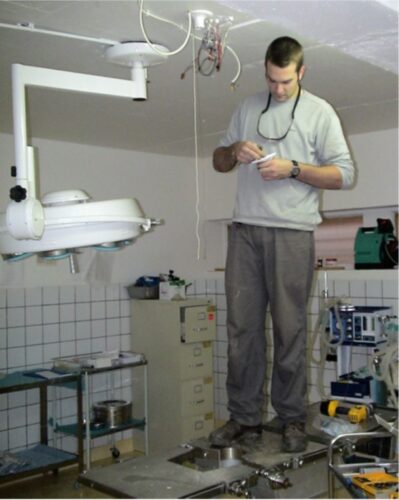
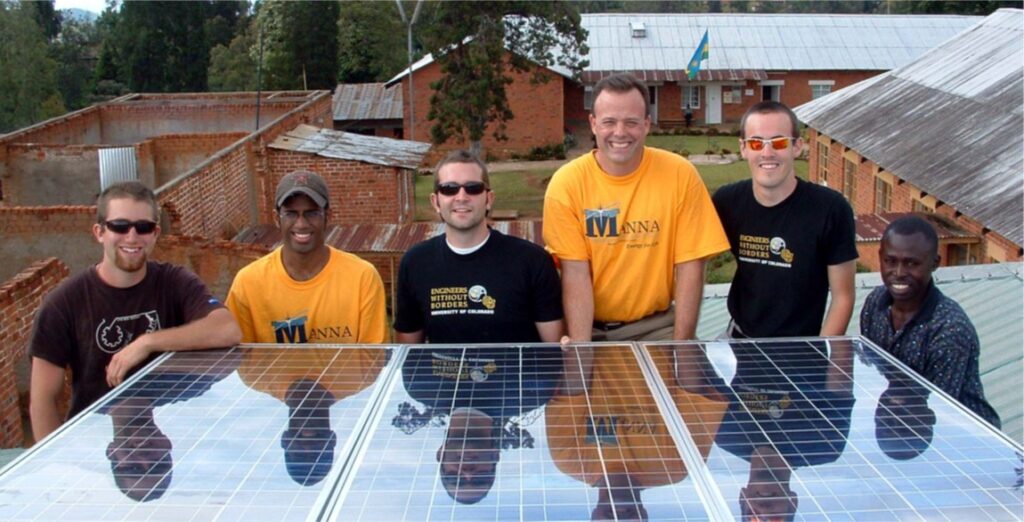
Top left: EWB-USA CU volunteer Johnny Jannetto confers with Kigali Institute of Science and Technology staff on biogas reactor system designed to provide fuel for a single family while demonstrating the technology to a wider audience. Top right: EWB-USA CU volunteer Niko Kalinic ponders proper installation of backup operating room illumination. Bottom: EWB-USA volunteers Johnny Jannetto, Kiran Vinta, Niko Kalinic, Ron Garan, and Evan Thomas, with Rwanda team member Jean-Pierre Habanabakize, reflect upon solar panels atop Mugonero Hospital.
2005 – 2006 (Hospital Mugonero Rainwater Catchment)
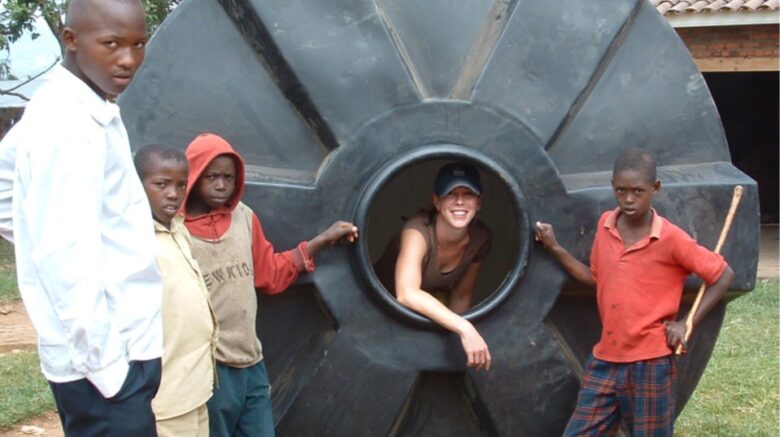
With the hospital in need of reliable sources of quality water the Houston chapter completed implementation of a 10,000-liter rainwater harvesting/catchment system for the hospital in June 2006. At the same time as that implementation work, the team completed their first assessment at the L’Espérance Children’s Village for
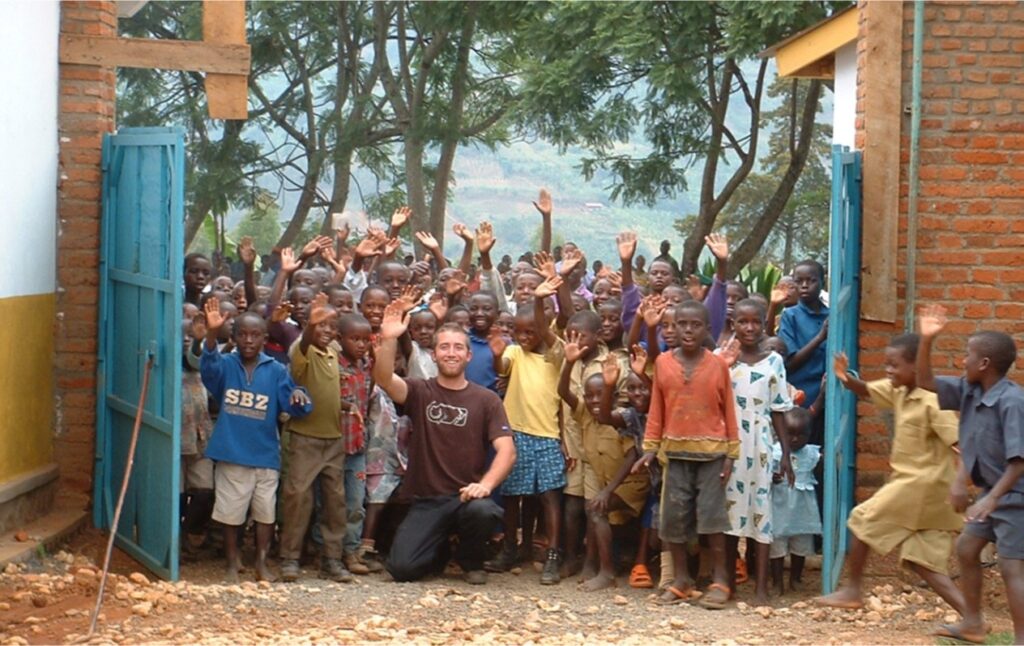
A warm welcome from L’Espérance Children’s Village.
2006 – 2007 (L’Espérance Children’s Village Water Purification and Filtration System)
The Houston team returned in 2007 for implementation of the orphanage’s own BYOW system. A cistern at the orphanage was originally constructed by L’Espérance under the supervision of their engineers with the intended use to act as a holding tank for water pumped from a stream downhill from the orphanage. As the project had not yet been completed and the cistern design being robust, EWB-USA commissioned a Rwanda construction foreman to inspect the cistern and develop a roof design to adequately support the BYOW system.
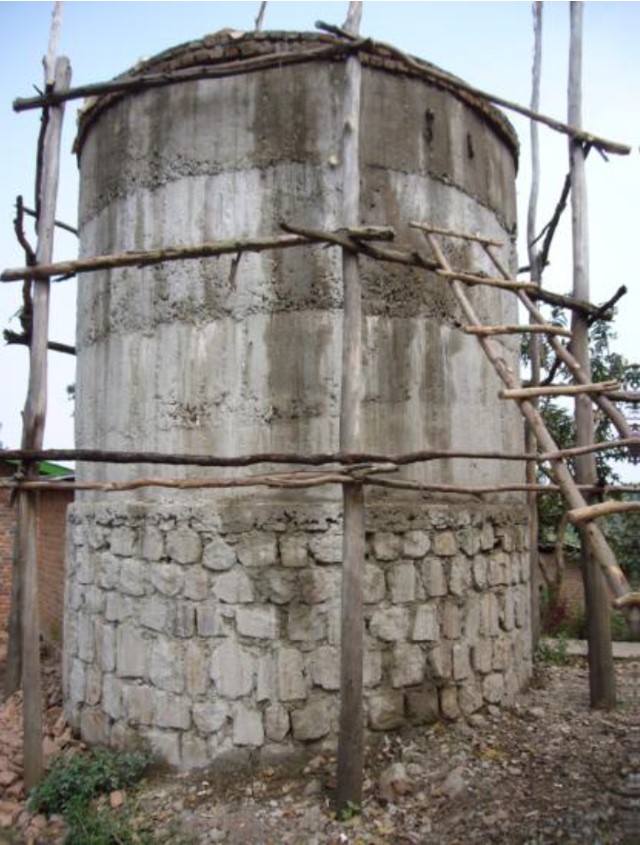
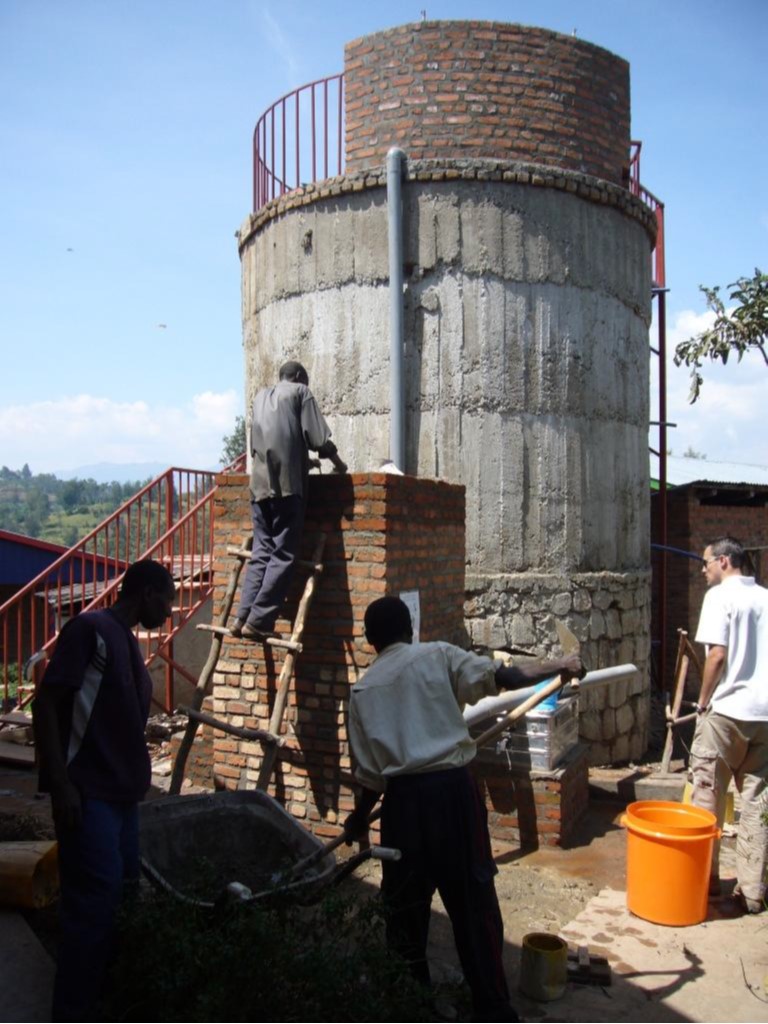
Left: Structure originally designed by L’Espérance, but left incomplete. Right: Masonry infrastructure being added to cistern structure to provide protection for BYOW system in addition to ensuring system has appropriate level of head to operate.
A design using structurally reinforced concrete was submitted to EWB-USA, reviewed by the team’s engineers, and determined to be more than adequate to support anticipated loads. Construction commenced prior to the EWB-USA team departure from the US to allow for adequate drying time of the concrete roof. Inspections once the team arrived to the orphanage confirmed sound construction. A staircase and masonry to protect the BYOW infrastructure were also built.
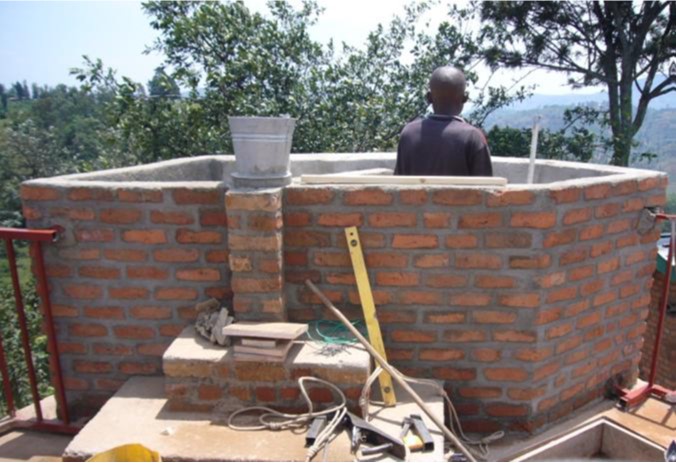
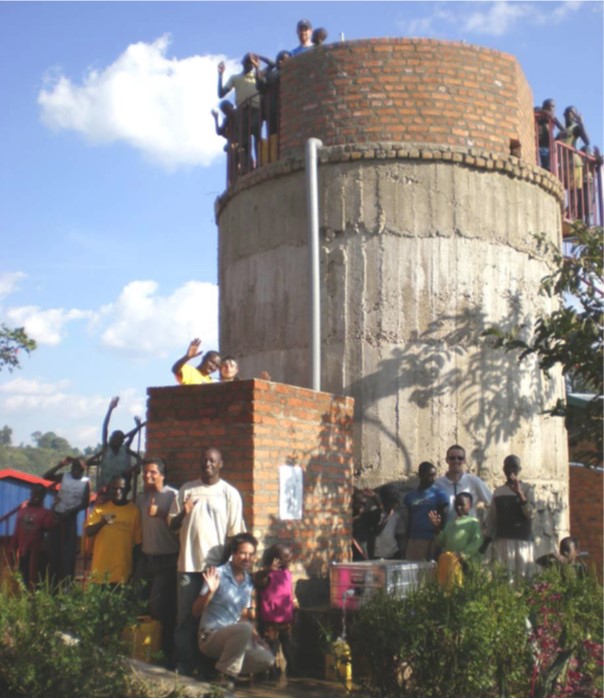
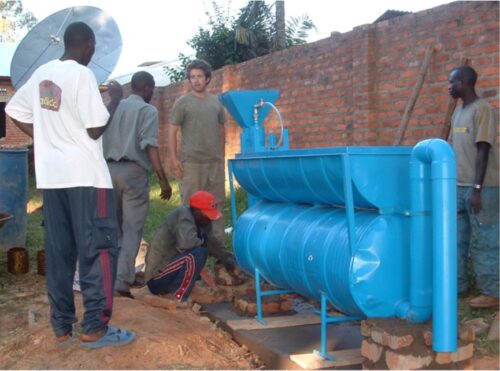
Left: Masonry housing built to protect BYOW System barrels. Right: Community members celebrating completion of the new water filtration and purification system.
Following completion of the implementation, the Houston team had the system monitored by the Manna Energy Foundation, a Houston-based non-profit. As of 2008 the system was in daily use by the orphanage to process and treat water for the orphanage children and guests. No major maintenance had been required since the initial installation, with only periodic backwash and cleaning of the system having been required. Monitoring for the system was turned over entirely to Manna Energy Foundation in 2010.
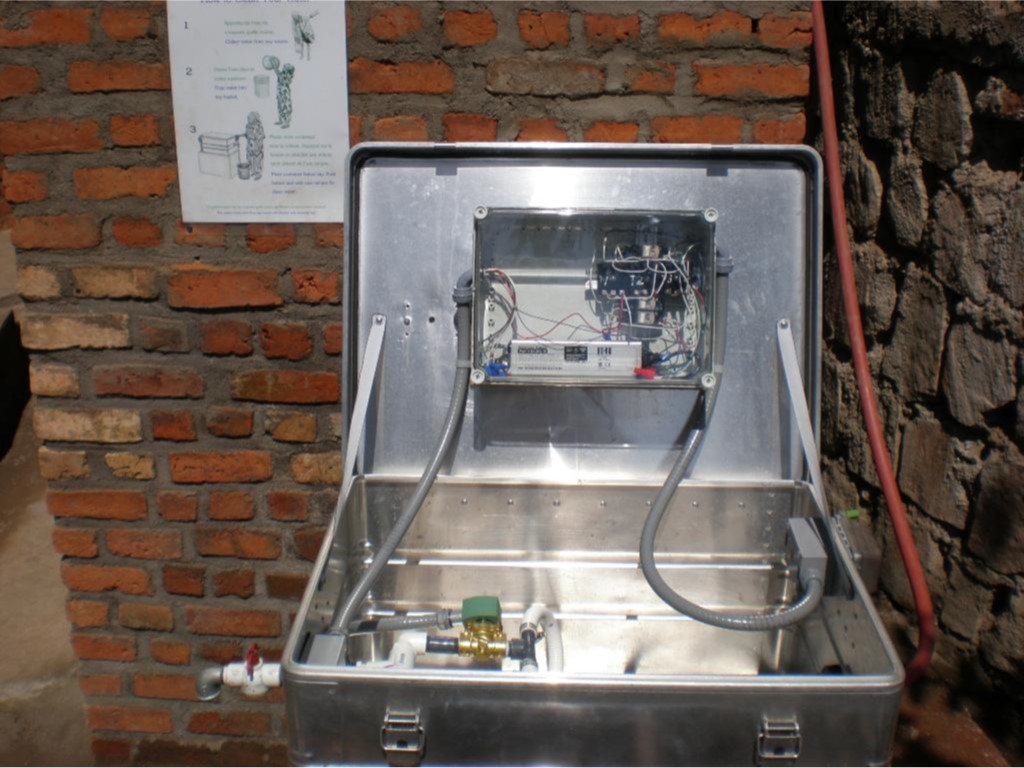
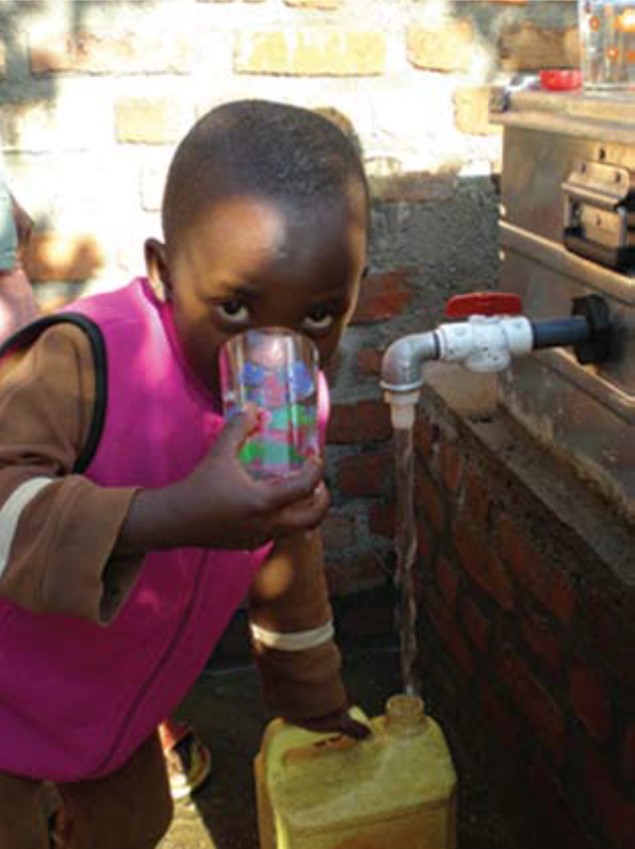
Left: UV sanitation box component for BYOW system, assembled in Houston prior to departure. Right: Clean water tastes great!
Based on these efforts with the BYOW system, Manna Energy Foundation was negotiating an agreement with the government of Rwanda to install water treatment systems at every secondary school in Rwanda over the next several years, based on the design utilized for the system at the orphanage.
2008 – 2011 (L’Espérance Children’s Village Solar Fruit Drying)
After installing the water treatment system at the L’Espérance Children’s Village, the team focused its efforts to help the orphanage reach economic sustainability through the processing and sale of dried fruit. It was decided that EWB-USA team’s involvement would be to deliver a sustainable fruit drying system.
Although L’Espérance Orphanage has the largest fruit orchard in Rwanda, including 2 hectares of pineapples, it is unable to economically capitalize on the resource. They have been in contact with a fair trade organization interested in selling dried pineapples; however, their inconsistent pineapple production during the dry season is prohibiting the opportunity.
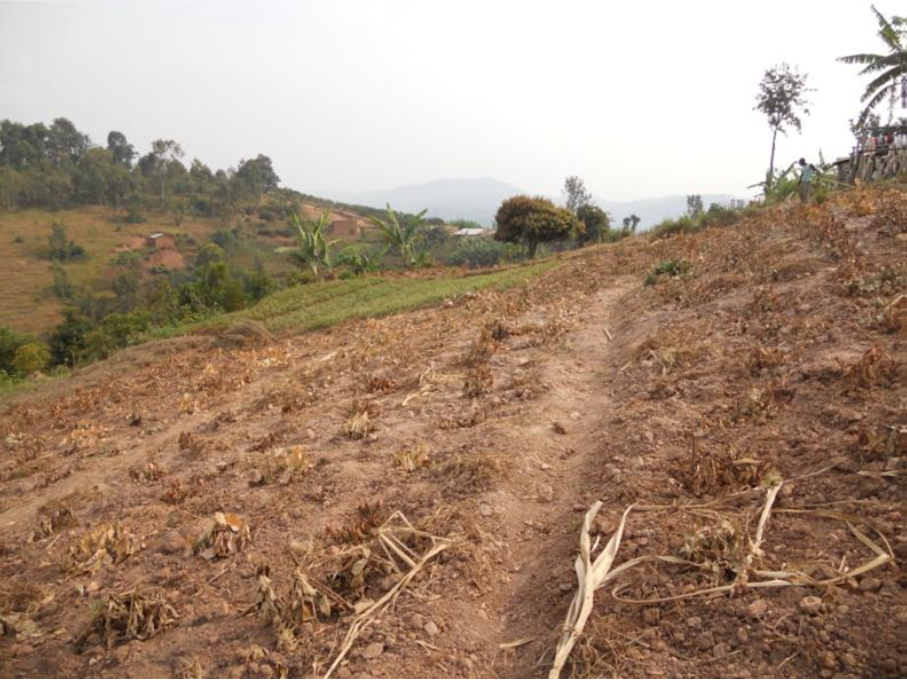
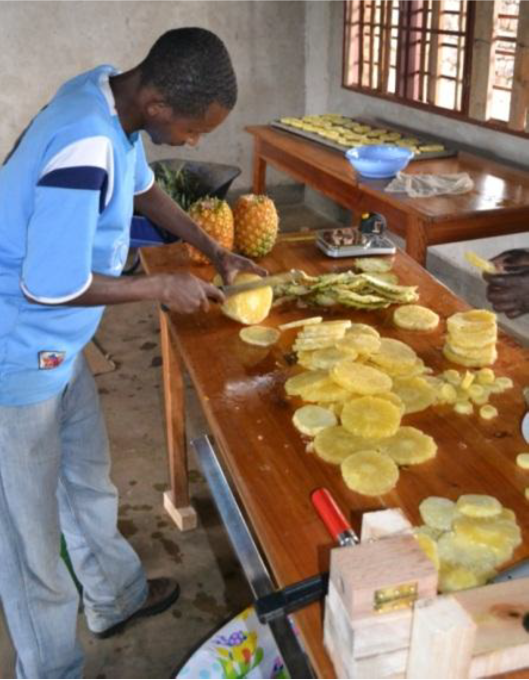
Growing fruit in the mountains and hills of Rwanda (left) is not the easiest, but the L’Espérance Children’s Village has found success in growing pineapple (right) on its land.
In 2007 following the BYOW implementation the orphanage director asked EWB-USA to assist in developing infrastructure for an ambitious agricultural project he was initiating, Orchard Project, which would allow the orphanage to become economically self-sufficient and independent of the Adventist Church by selling high quality premium produce in the developed world. Drip irrigation, water storage, food processing, sterile facilities, water management, waste management, packaging, food storage, pre- and post-processing, and improved energy infrastructure are all necessary features of this endeavor.
Fruit drying is on the critical path to success of this project because (1) the orphanage lacks sufficient electricity to refrigerate the fresh produce, (2) transportation to the markets is not possible on a schedule to keep fruit from spoiling, and (3) roads follow 26 kilometers of exceptionally tortuous dirt paths that would bruise whole produce and (4) shipping costs to foreign markets would be greatly reduced by removing water weight from the fruit, which accounts for ~85-90% of the fruit weight.
An initial fruit drying assessment trip in 2008 provided additional information and important lessons learned. This led to an implementation trip in 2011 where a solar dehydration prototype system was installed and tested. At the time of the 2011 trip, it was recognized that an entirely solar based drying system would be insufficient to dry all the fruit the orphanage would ultimately produce, due to substantial portions of the year where sunlight is not prevalent, however, was necessary to implement as a training article.
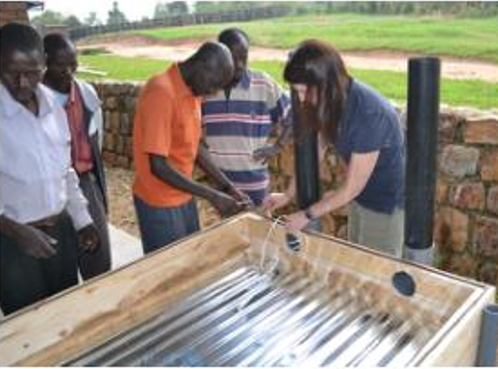
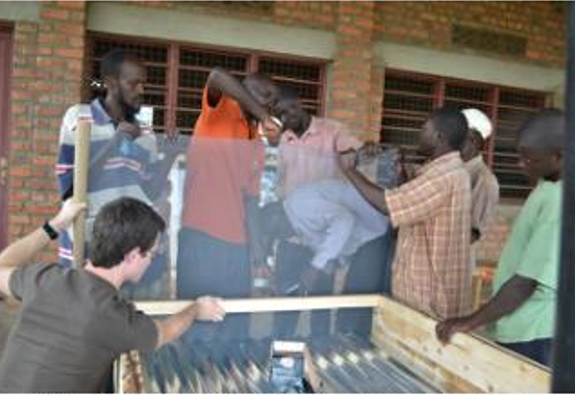
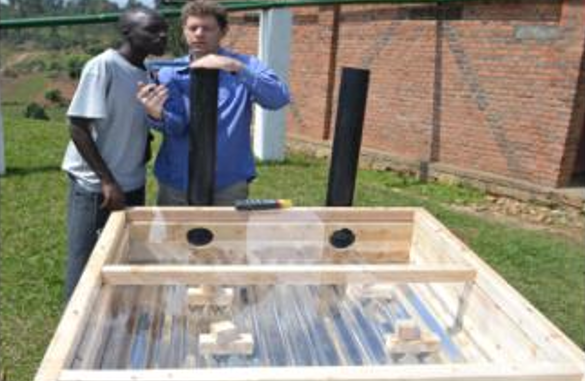
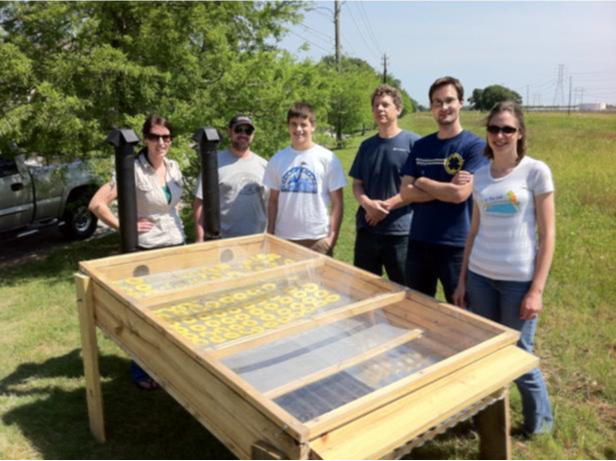
All photos: The Houston EWB-USA team worked with local craftsman and orphanage employees to build 3 solar dryers and begin the training on drying fruit in the solar dryers.
The three 2011 implemented solar fruit dryers are in use by the orphanage to dry loads of pineapple every three days. The bacterial testing materials were removed from the team’s luggage during transport to Rwanda and, therefore, testing was unable to be performed. Based on responses from visitors to the orphanage and the orchard project manager the dried fruit product is of high quality.
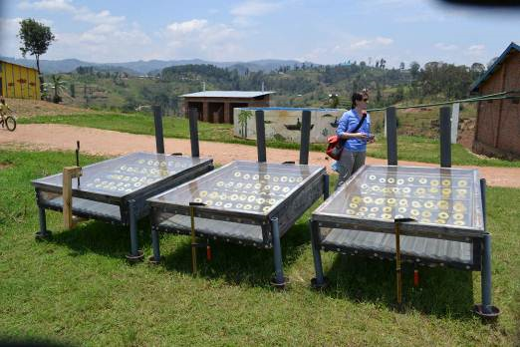
3 completed solar dryers being put to work on the freshest pineapple.
Maintenance of the 3 solar dryers has not been required other than one item. The lid of one of the dyers became warped in the humidity. The fruit processing orphanage team created a method to seal the lid. An inspection of the implemented solution occurred and efficient sealing was reached with the orphanage solution and will continue to be in place until the year-round dryers are built.
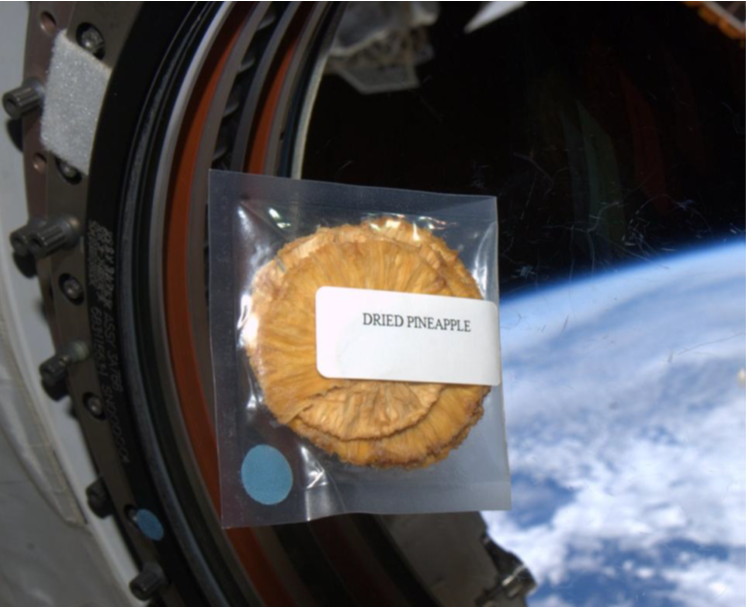
Dried pineapple produced by the L’Espérance Children’s Village was taken to space with EWB-USA volunteer & astronaut Ron Garan. It tasted out of this world!
2012 (L’Espérance Children’s Village Year-round Fruit Drying)
The L’Espérance Children’s Village is using the solar dryers built by EWB-USA team in 2011 to dry small quantities of pineapple as the weather allows, and has set up two displays of their product in Kigali advertising their dried fruit. Furthermore, in April 2012, pineapple dried by the orphanage began being sold at two stores in Kigali. However, at this point in the development of the Orchard Project, a means of expanding the fruit drying capacity beyond that provided through the solar dryers is needed. This expansion is required both in terms of the quantity of fruit dried and in the availability of drying independent of the weather
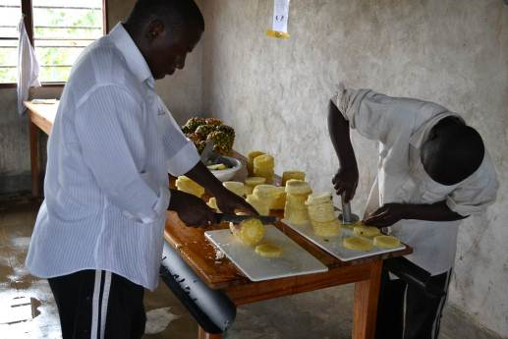
Processing of pineapple at the L’Espérance Children’s Village in preparation for solar drying.
The EWB-USA team performed an assessment trip in September 2012 in support of the orphanage’s fruit dehydration project. The primary focus of the trip was the fruit dehydration project; however, monitoring activities were performed on the Bring-Your-Own-Water (BYOW) system installed previously as part of an ongoing agreement with Manna Energy Limited (Manna), which had taken over ownership of the BYOW system.
The assessment trip gathered the information required to implement a year-round dryer system at the orphanage. This included significant time in Kigali dedicated to locating items know to be required in order to build a dryer capable of producing dried fruit to standards required for sale on the international market; temperature and electronic control systems, and food grade materials have all been determined through both comparative analysis and through consultation with several food service and import companies to be essential to producing edible product to international food export standards. These materials were all determined to be either available in country, or able to be ordered and delivered to Kigali.
It is the intent of this project that a sustainable fruit drying system will be installed at the Mugonero Orphanage. This effort, undertaken entirely at the behest of the community, will serve as the lynch pin for a dried fruit export business, the revenues of which will be directed to serve the housing, health and educational needs of the 127 children at the orphanage.
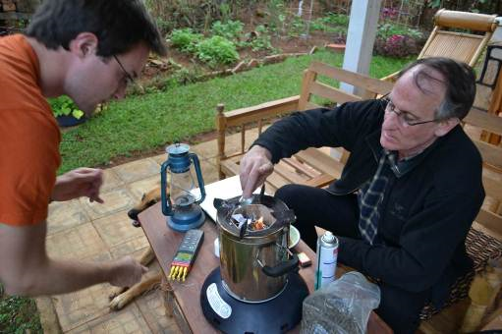
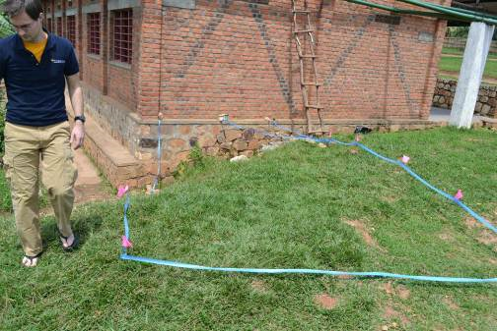
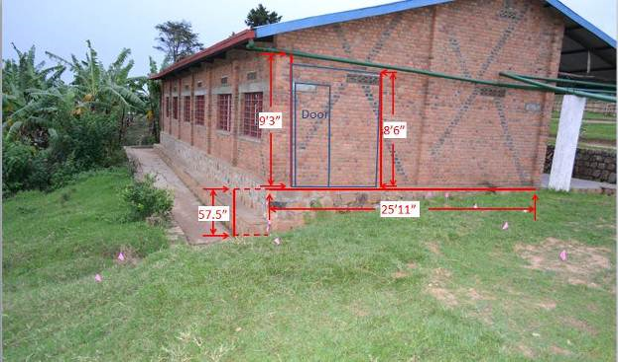
Top left: EWB-USA working with a potential stove for dryer heat testing and demonstration. Top right: The proposed dryer building layout in blue tape for review with the orphanage director, orchard project manager, and building construction lead. Bottom: The interface between the new dryer building and the Process Hall is represented in blue, while samples of the dimensions that were taken are provided in red.
The project only continued through the design process. The EWB-USA team had proposed a design that was under review prior to implementation, but before any implementation work could begin the EWB-USA team was informed in April 2014 that the L’Espérance Children’s Village (with 97 children still at the orphanage) would be closing before the end of the year. The Rwanda federal government had recently implemented a new policy requiring the closure of all orphanages in the country, with an intent to return the country to a community/extended family-based childcare model for orphans.
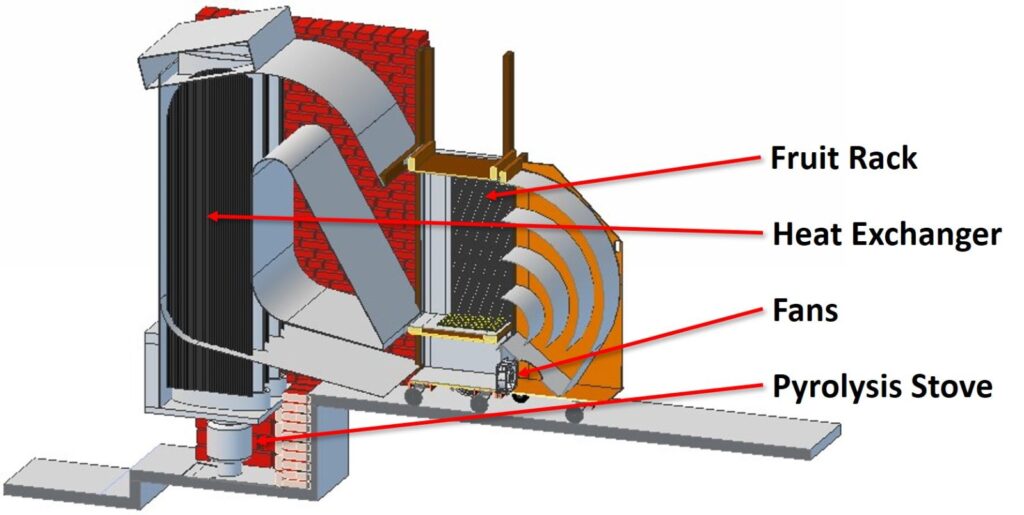
Side cutaway of proposed fruit dryer design for L’Espérance Children’s Village.
With no other options available, the Houston chapter’s Rwanda program was formally closed by EWB-USA in May 2015 without plans for any future work.
PROJECT ADOPTION DATE:
March 2004 (South Houston/JSC Professional Chapter)
PROJECT STATUS:
Complete
TEAM LEADS:
- Evan Thomas – Program Co-Lead
- Jack Bacon – Program Co-Lead
- Tyler-Blair Sheppard – Program Co-Lead