
LOCATIONS:
Jalamma Palem, Batti Somiah Palem, Ulla Palem, Sri Rama Pattapu Palem, and Alegaya Palem, Andhra Pradesh, India
Area approximately 110 miles (177 km) southeast of Amaravati.
COMMUNITY DETAILS:
On December 26, 2004, an earthquake off the coast of Indonesia triggered a tsunami that hit the coastal regions of South Asia. In Andhra Pradesh, India, a five-meter high wave pushed over two kilometers; destroying houses, ruining wells, and taking out entire fishing fleets. Engineers Without Borders USA was asked to assist over 45 fishing villages in the region. With the other professional chapters, members from the Central Houston chapter worked in multiple communities over several years.
PROJECT SUMMARY:
The Andhra Pradesh Project was one of EWB-Central Houston’s longest-ongoing projects in a joint effort with the North Texas Professional Chapter, San Francisco Professional Chapter, the Boston Professional Chapter, the Los Angeles Professional Chapter, the San Diego Professional Chapter, and the Minneapolis Professional Chapter.
During a March 2006 trip by three of the chapters multiple implementations were carried out:
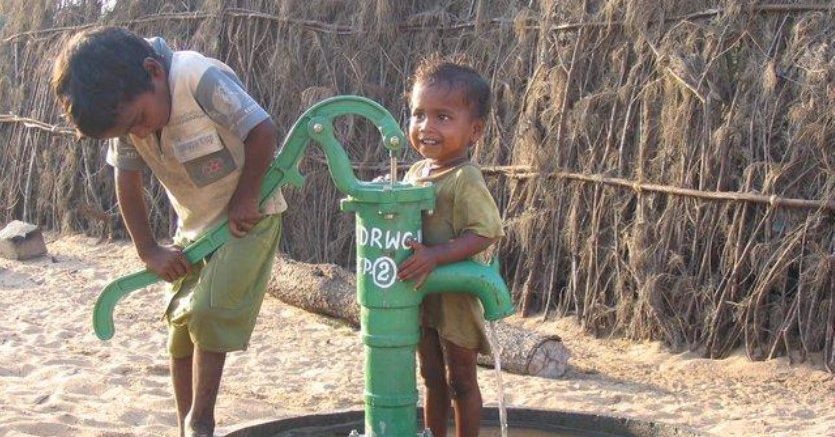
- Jalamma Palem – 2 handpumps and 1 solar-powered pump installed, 15 solar lights distributed, 1 solar streetlight installed
- Batti Somiah Palem – 3 handpumps installed
- Ulla Palem (split into sections Basin Palli Palem/Devala Palem) – 9 handpumps installed
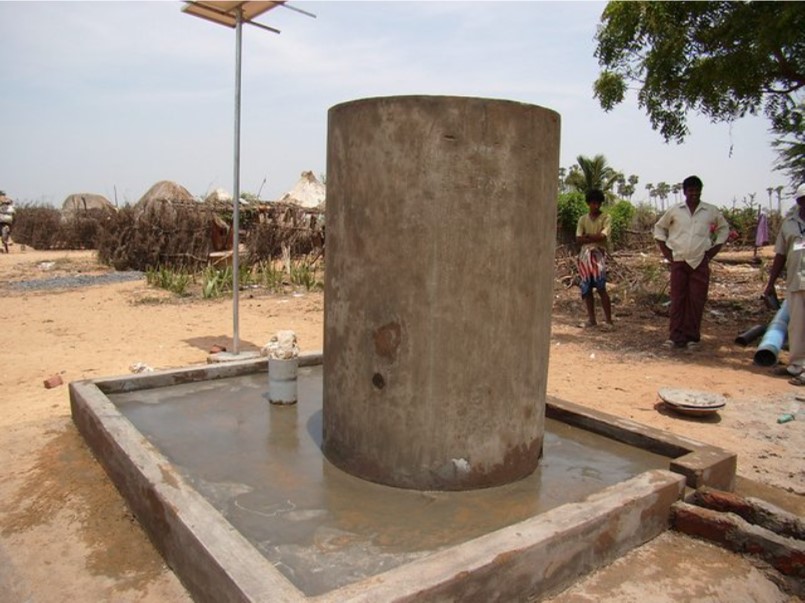
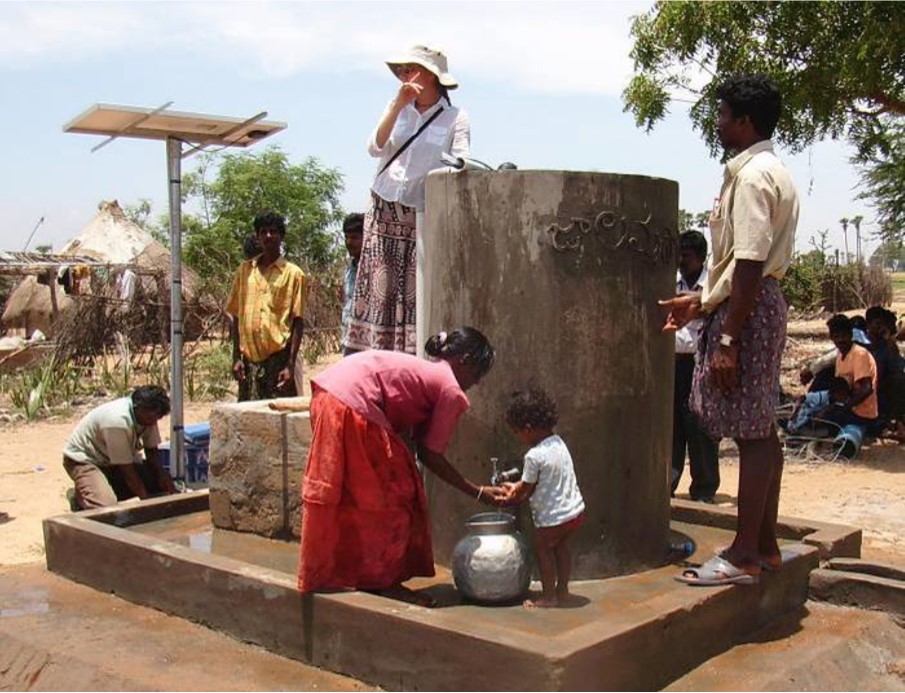
Left-to-right: Preexisting community well in Jalamma Palem converted to water station during 2006 implementation. The existing pad is reused and a water storage tank was also constructed. The rainwater catchment will supply a portion of the water necessary for the people, but will be supplemented with water from the shallow groundwater aquifer in the area that provides all drinking water for the region. The intent of the water station is to supply water and to provide a space for people to wash clothing or do other common tasks in an easily cleaned environment that is lit at night and shaded in the day. The wastewater generated at the station will be treated using a natural constructed wetlands system.
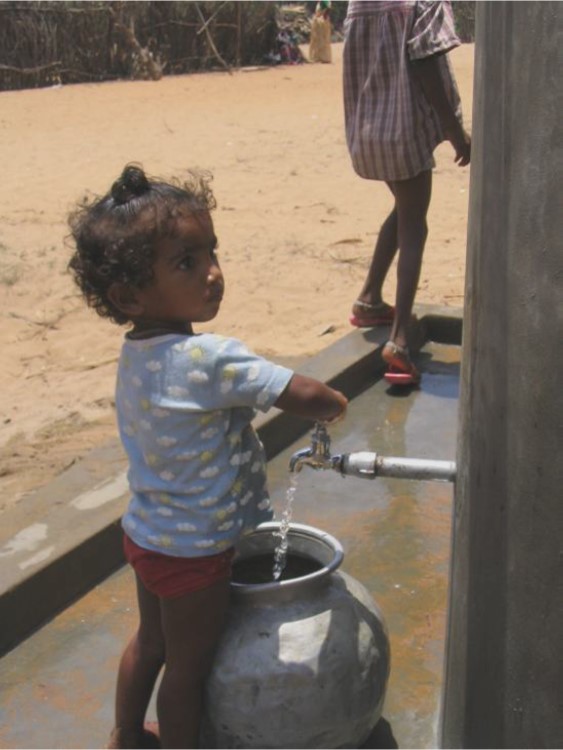
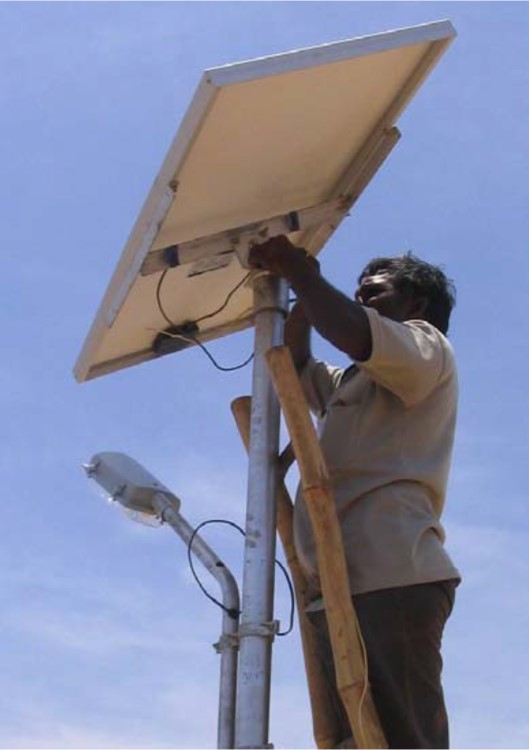
Left: Using one of the new taps installed on the new water station in Jalamma Palem. Right: Installing a solar streetlight next to the new water station to provide lighting in the area at night.
In the fall of 2006 efforts were begun on a large-scale housing project in Sri Rama Pattapu Palem that would entail development of water and sanitation systems in addition to the housing structure. However, work halted by the chapters at the site after just the installation of six handpumps due to cancellation of the housing program altogether.
In 2007 plans were developed by the EWB-USA chapters to develop and build additional water stations in the community of Jalamma Palem. These would be scaled-down in scope but comparable to the prior water station developed in the community in 2006.
Those construction plans pivoted when the community began to abandon the village and relocate to the neighboring village of Alegaya Palem by July 2008. Construction of the water stations were completed by the community in that village by the end of 2008 with remote oversight by the EWB-USA chapters.
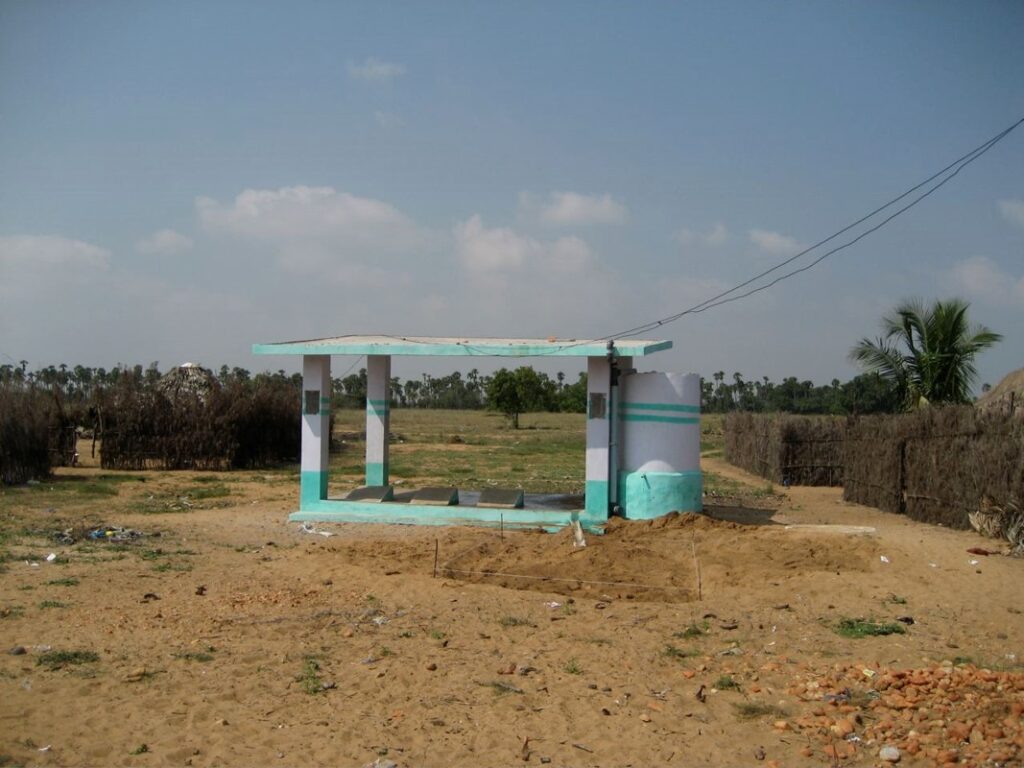
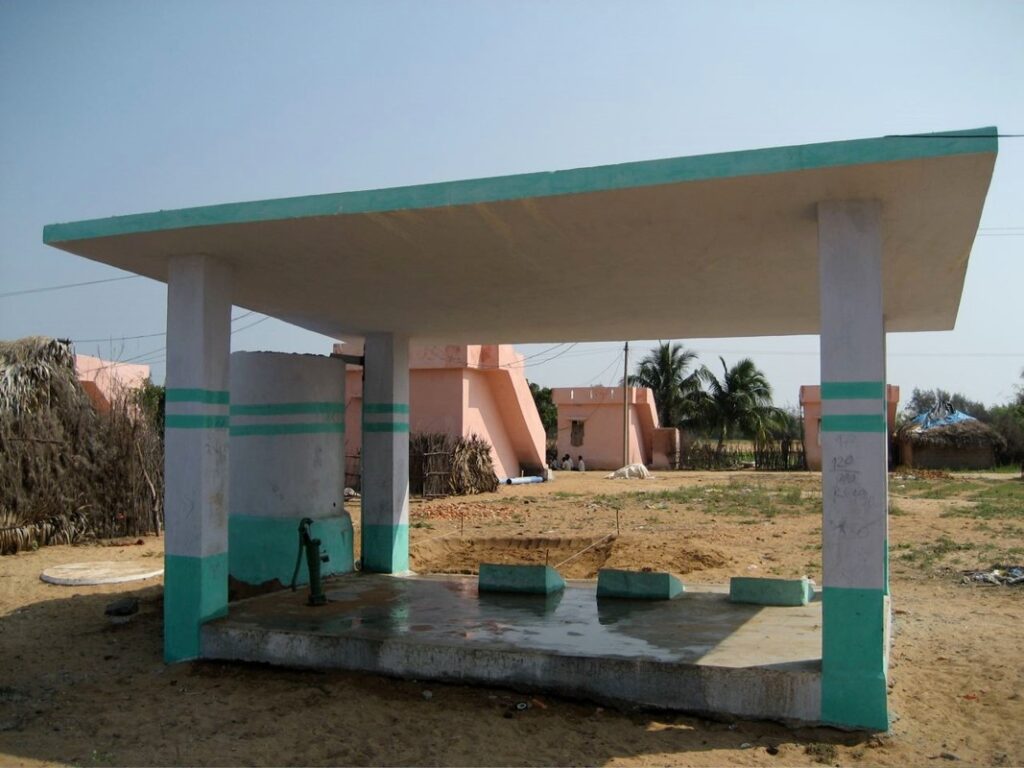
Left and Right: New covered water station constructed in Alegaya Palem in 2008. The station features rainwater catchment off the sloped roof into a tank, and three areas where wash can be performed, with runoff filtering into a designated natural settling & filtration basin.
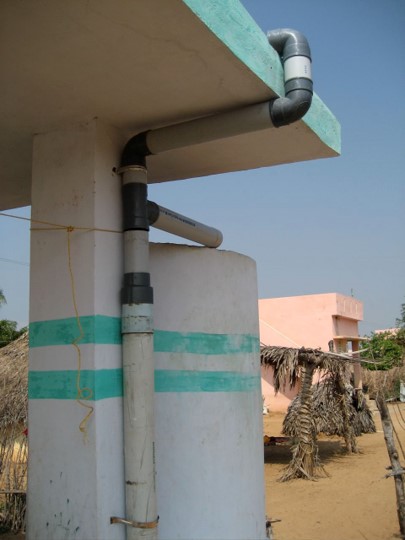
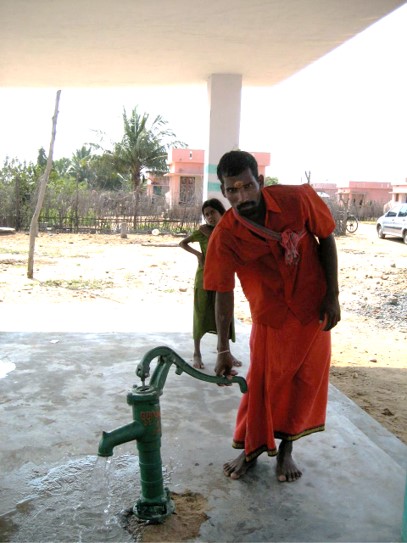
Left: Rainwater catchment from the roof into a nearby collection tank. Right: Water from the new handpump!
The Andhra Pradesh program was closed out in 2010 due to a number of reasons, but primary amongst those was that the communities had undergone a dramatic transformation in the years since the tsunami.
Communities the EWB-USA chapters had worked with either relocated or had so much investment by the Indian government that EWB-USA projects no longer make sense for them. EWB-USA projects require that communities take ownership and maintain their projects, but since there were so many NGOs and government projects in the area, the incentive for the community to maintain these projects was not there. Other NGOs would simply step in and replace or repair projects.
The total benefit impact is unknown. While some of the early handpump installations were successful, monitoring of that construction in the several years following implementation showed that maintenance was not ongoing, with the expectation that a number of the pumps may fall into disrepair without additional intervention. With local populations still in flux with resettling in the region following the tsunami, approximate numbers of beneficiaries from the projects could also not be identified.
Of all the lessons that can be drawn from this project, the most important and unique to this project were those regarding the applicability of the EWB-USA model to disaster relief efforts and the administrative challenges of overseeing multi-chapter projects.
In the aftermath of the tsunami, the intense media coverage and heartbreaking scope of the disaster led to an astonishing international response. Countries and organizations worldwide pledged billions of dollars of support. EWB-USA seemed a natural fit to participate in a humanitarian response to these affected areas, and there was a lot of interest within the EWB-USA community in participating in a humanitarian response.
The challenges of running community development projects are well known to any EWB-USA project volunteer. The NGO, volunteers, and community members must all be on the same page with regards to their goals and obligations in order for the project to come to a satisfactory conclusion. In a disaster relief situation, these issues are amplified, as organizations rush into the area, all offering similar forms assistance to the same communities and some with millions of dollars of money backing them.
This project was the first major effort by EWB-USA to draw several chapters together to perform a joint project. Many issues in this project pointed to a need for strong centralized organization and accountability from the beginning.
PROJECT ADOPTION DATE:
May 2005 (Central Houston Professional Chapter)
PROJECT STATUS:
Complete
Impact: Benefit from the water and power projects unknown.
TEAM LEAD:
- Ann Marie Spexet – Project Lead